A sediment core from Arizona’s Stoneman Lake provides an archive of dust emissions and pollen records in the region that extends through multiple ice ages.
Reno, Nev. (Dec. 2, 2025) – Atmospheric dust plays an important role in the way Earth absorbs and reflects sunlight, impacting the global climate, cloud formation, and precipitation. Much of this dust comes from the continuous reshaping of Earth’s surface through the erosion of rocks and sediments, and understanding how this process has shaped landscapes can help us decipher our planet’s history – and its future. Although an ephemeral phenomenon by nature, dust emissions through time can be depicted through natural archives like lake sediment cores. In a new study, scientists examine one such record to peer 230,000 years into the past of the American Southwest. The region, they found, produced 1.2 to 10 times more dust between ice ages than during them, in contrast to other areas around the world. The findings can help scientists better predict how landscape disturbance, including by human activities, may contribute to atmospheric dust loads and alter future weather patterns.
The research, published Nov. 28th in the journal Nature Communications, was led by DRI scientist Spencer Staley. Staley examined a lake sediment core from Stoneman Lake, Arizona, that has been collecting atmospheric dust from around the Southwest for millennia. By quantifying the rate of dust deposition in the lake sediment, Staley and his team could observe dust processes of the entire region upwind of the site, offering a regional perspective on the historical landscape processes occurring at Earth’s surface.
“Stoneman Lake has been around for over a million years, and it’s been collecting sediment and recording paleo environments for that entire time,” Staley said. “In that region, a lake that’s been around that whole time, even during the drier periods, is kind of unheard of. It’s been recording history for a very long time.”
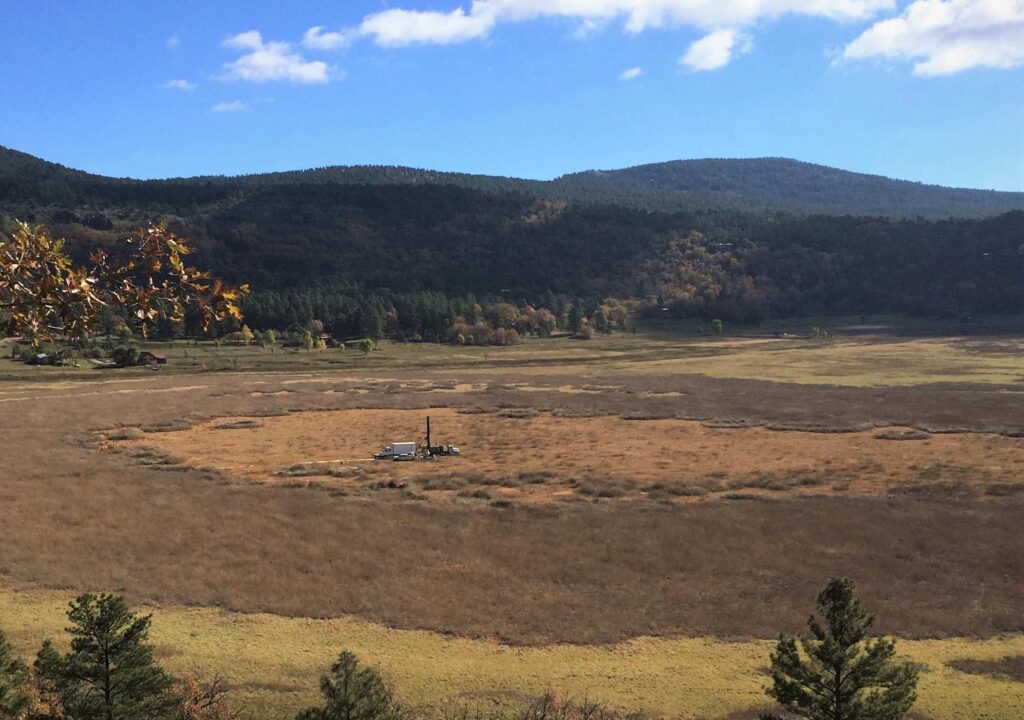
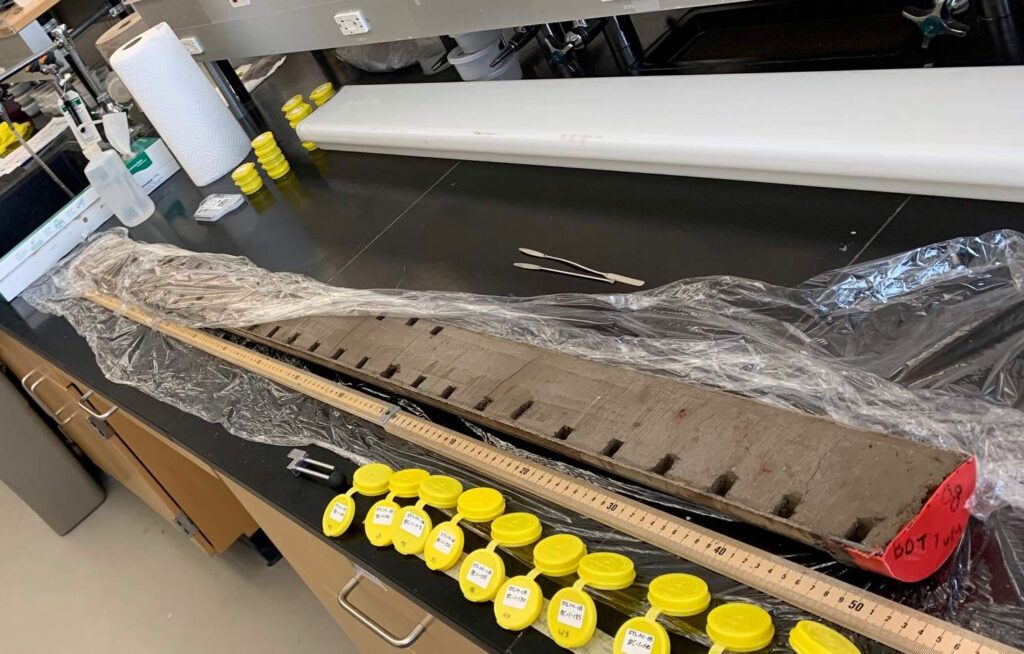
The lakebed consists of sediments sourced locally, much of which were washed in, that offer a glimpse of historic landscape processes around the lake. It also contains more fine-grain sediments that were likely carried greater distances by the winds. Staley and his colleagues first noticed that lake sediment samples might offer a unique glimpse of the past when they realized that much of it contained quartz in a watershed primarily composed of basalt. Ash from volcanic eruptions allowed them to establish dates throughout the sediment core, while preserved pollen offered glimpses of how the plant life surrounding the lake changed through time.
The record offers a unique perspective of how ecosystems throughout the Southwest responded to historic climate fluctuations and how these changes impacted dust emissions.
“When we look at paleo records, we look back in time, providing context for what we’re seeing in the present and what we might see in the future,” Staley said. “We’re seeing a lot of dust resulting from human activities, and this study can provide a baseline for comparison.”
Dusty deserts might be taken for granted, but the study offers evidence that the hottest and driest eras didn’t always correspond to the dustiest periods, which related more to the way that Earth’s surface was exposed to the atmosphere. Throughout historic ice ages, the Southwest was wetter and lush with plant life, stabilizing much of the landscape with water bodies and plant roots. As the climate warmed and water became more scarce, hill slopes eroded, contributing dust to the atmosphere and rivers.
“Aridity and dust and sediment exposure do go together,” Staley said. “But if you’re looking to put a fine pin on it, it really doesn’t matter how dry it is – you need sediment to blow around.”
The exact sources of the dust weren’t identified in the study, and Staley hopes to expand on this research in future work. The research team will continue to analyze and publish their findings from the Stoneman Lake sediment core, which extends even further back in time and may provide insight into the Southwest’s climate up to a million years ago.
—————————————————————————————————————
More information: The full study, Higher interglacial dust fluxes relative to glacial periods in southwestern North American deserts, is available from Nature Communications at https://doi.org/10.1038/s41467-025-65744-6
Study authors include: Spencer Staley (DRI, U. of New Mexico), Peter Fawcett (U. Of New Mexico), R. Scott Anderson (Northern Arizona University), and Mattew Kirby (Cal State U. Fullerton)
About DRI
We are Nevada’s non-profit research institute, founded in 1959 to empower experts to focus on science that matters. We work with communities across the state — and the world — to address their most pressing scientific questions. We’re proud that our scientists continuously produce solutions that better human and environmental health.
Scientists at DRI are encouraged to follow their research interests across the traditional boundaries of scientific fields, collaborating across DRI and with scientists worldwide. All faculty support their own research through grants, bringing in nearly $5 to the Nevada economy for every $1 of state funds received. With more than 600 scientists, engineers, students, and staff across our Reno and Las Vegas campuses, we conducted more than $52 million in sponsored research focused on improving peoples’ lives in 2024 alone.
At DRI, science isn’t merely academic — it’s the key to future-proofing our communities and building a better world. For more information, please visit www.dri.edu.
Media Contact
Elyse DeFranco
Lead Science Writer & Public Information Officer
elyse.defranco@www-dev.dri.edu