The technology-driven project analyzes and prevents pollution from car tires
LAKE TAHOE, Nev./Calif., September 11, 2025 – Today, Keep Tahoe Blue, The Tyre Collective, and DRI announced a groundbreaking collaboration with the Emerald Bay Shuttle and its operator, Downtowner, that brings together science, technology, and alternative transportation to protect Lake Tahoe’s world-renowned water clarity.
“While we know that vehicles impact water quality and Lake clarity, this project will help us better understand exactly how vehicles contribute to Tahoe’s water quality challenges,” said Laura Patten, natural resource director at Keep Tahoe Blue. “That knowledge is critical to creating solutions that protect this national treasure.”
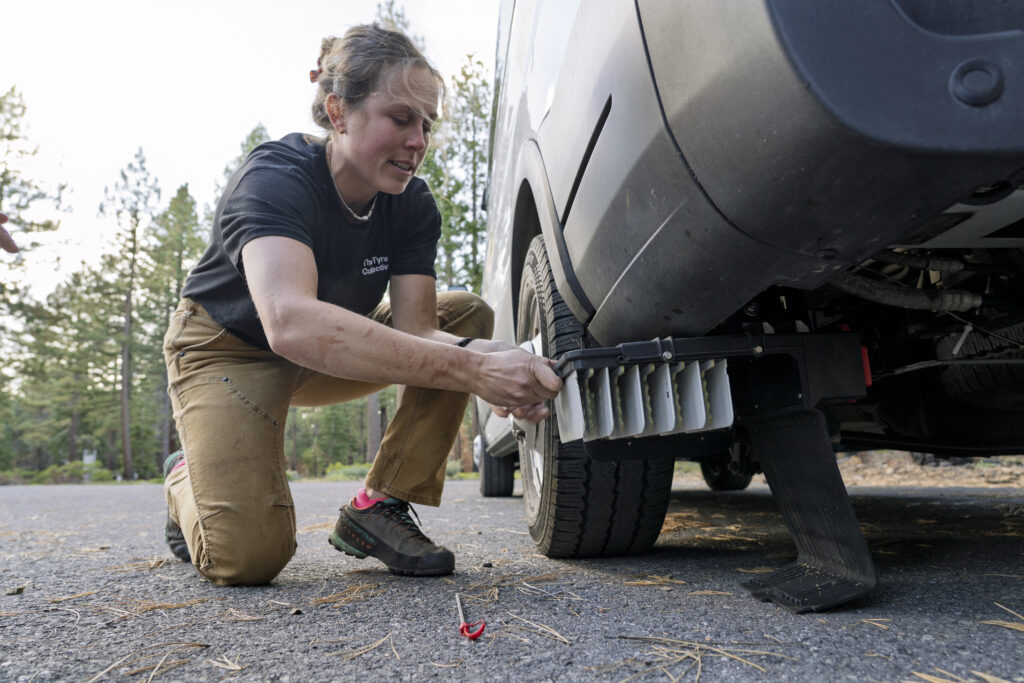
Photo credit: Tahoe Blue
The pilot program employs The Tyre Collective’s proprietary technology — discrete, compact devices affixed to a vehicle’s undercarriage — to capture harmful tire wear particles directly at the wheel.
Particles emitted as tire wear are a source of microplastic pollution in waterways and a contributor of small yet harmful particulate matter (PM) in the air. Additionally, research from the California Department of Toxic Substances Control and CalEPA note that tire wear particles contain chemicals such as 6PPD and 6PPD-q, which are leaching into waterways and threatening aquatic species.
“Tire wear is a silent but significant source of pollution — it’s in our air, our oceans, and our waterways,” said Siobhan Anderson, co-founder and CSO at The Tyre Collective. “We are excited to demonstrate our technology at Lake Tahoe, an iconic environment where protecting clarity and water quality is critical.”
Throughout the month-long pilot project at Tahoe, Keep Tahoe Blue, The Tyre Collective, and DRI will analyze samples of transportation-related pollutants captured by the devices to better understand and quantify the impacts of:
- Tire wear particles as a growing source of pollution in both the air and water.
- 6PPD-q, a toxic chemical found in tires that is lethal to many fish species and a concern to Tahoe’s aquatic life.
- Microplastics, which threaten water quality and Lake clarity as they accumulate.
- Fine sediment particles — the leading cause of clarity loss in Lake Tahoe — that bind with other pollutants and worsen their impact.
Together, these measurements will provide one of the most comprehensive looks at how emerging pollutants intersect with Tahoe’s long-standing water quality challenges.
“DRI’s role is to provide the science that validates and informs these efforts,” said Dr. Monica Arienzo, Assistant Research Professor at the Desert Research Institute. “Testing these fine sediments from tires, and collecting samples throughout the pilot, will guide solutions to prevent this source of pollution.”
The pilot also seeks to demonstrate that alternative transportation options like the Emerald Bay Shuttle, which prevents traffic impacts by taking cars off the road, can be paired with The Tyre Collective’s tire wear capture technology to holistically protect Tahoe’s air and water quality.
###
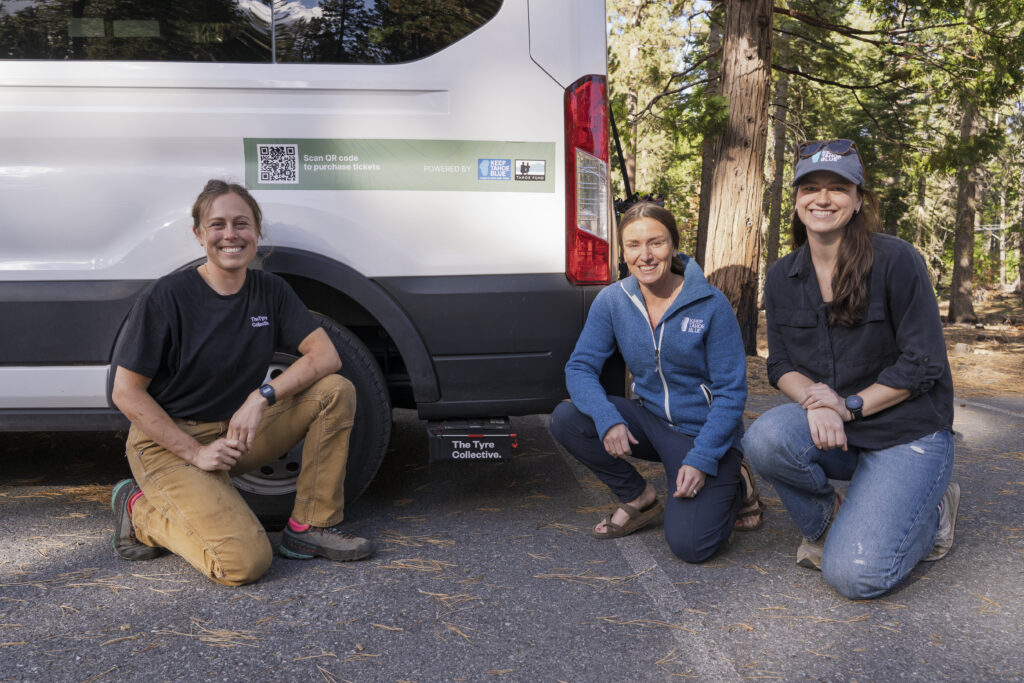
Photo credit: Tahoe Blue
About Keep Tahoe Blue:
We are the donor-funded, science-based organization of environmental experts and Tahoe-lovers behind the movement to Keep Tahoe Blue. We have led the protection and restoration of the Lake Tahoe Basin since 1957 and continue to conserve the health of Tahoe for all, for generations to come. We use science to design innovative solutions, advocate with federal and state partners on behalf of the Lake, and engage thousands of volunteers as citizen scientists and stewards of Tahoe. Learn more, donate, and get involved at keeptahoeblue.org.
About The Tyre Collective
The Tyre Collective is a London cleantech start-up developing on-vehicle solutions to capture tyre wear at the source, using their patented electrostatic technology. They have piloted their device with companies like Rivian, HIVED and Vinci Group . www.thetyrecollective.com
About DRI
We are Nevada’s non-profit research institute, founded in 1959 to empower experts to focus on science that matters. We work with communities across the state — and the world — to address their most pressing scientific questions. We’re proud that our scientists continuously produce solutions that better human and environmental health. For more information, please visit www.dri.edu.