DRI Research Immersion Internship Spring 2026
DRI Research Immersion Internship Spring 2026
Internship opportunities driven by career discovery in science, technology, and entrepreneurship
Build new skills, gain exposure to research, and develop your resume for a career in science. This internship program is designed for students at Nevada’s state and community colleges to take the first step in their career in science.
About the Program
 The Opportunity
Science at the Desert Research Institute is an immersive opportunity to work hard and grow your professional skills. Broaden your knowledge in ways that contribute to solving the STEM problems of the future.
Learn more about your career field and deepen your experience working on real research in a professional setting. Each year, DRI has opportunities for interns on several different projects. Interns rank their choice of projects and are matched with one of the topics available for that year.
What it Involves
The DRI Research Immersion Internship program will take place during spring semester 2026 (January 20-May 8, 2026). This paid internship involves working with a team dedicated to real-world problem solving with real-world scientists. Interns must be ready to take on new challenges by learning new skills and broadening their knowledge base.
After a guided training period, interns will work closely with mentors and their team members on science, technology, and entrepreneurship-focused projects that will launch both their curiosity and their careers. Students do not have to be enrolled in a science major to apply for the program, however they must be interested in learning about complex science topics.
This program is driven by inclusive excellence, and the target audience for this program is first and second-year students in Nevada’s community and state colleges.
Intern Testimonials
“I really appreciated the opportunities to grow and learn, and my mentors were all so wonderful. I would highly recommend this program to anyone looking to experience real-world research and how the scientific process is implemented in the world outside of school.”
“Based on my experience during this internship, I would absolutely recommend this program to others because it will help them in creating connections with amazing scientists, expand their knowledge in tackling real life environmental issues, and learn to work as a team which is important for any profession moving forward.”
“This semester allowed me to be more confident in a field I had little knowledge about. I met so many new peers and found myself in a new world. I would like other students to discover themselves too.”
Eligibility
 You have already completed high school who are currently enrolled at CSN, GBC, NSU, TMCC, or WNC in any major.
- You are interested in science, technology, engineering, or math.
- You want to take on new challenges, expand your knowledge, and work hard.
- You are dedicated to following through, accountability for your work, maintaining a consistent work schedule.
Commitment
This is an 8-hour per week commitment for the spring semester, up to 120 hours total. The weekly schedule will be determined by the internship mentors once students are selected.
Compensation
Students earn $14/hour for their participation in the internship. Please view on the next tab the commitment for each project (number of hours per week).
Deadline
Applications are due November 7, 2025.
For Current College Students
Opportunities for students enrolled at CSN, GBC, NSU, TMCC, or WNC (who have completed high school).
Data analysis for seismology: What’s shaking Southern Nevada?
Mentor name: Cleat Zeiler, Ph.D.
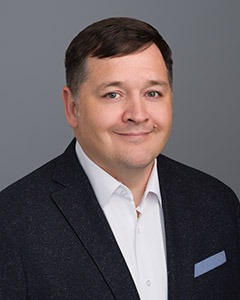 Apply if you are interested in: The study of seismology (study of earthquakes) and acoustics, analyzing time series data, data visualization, exposure to software and analytical tools for database techniques.
About the project: The Community Environmental Monitoring Program has recently installed seismo-acoustic sensors at 12 stations in central and southern Nevada. These new data streams deliver critical new information, however because they offer ‘higher-resolution’ sampling, the techniques that use these data need to be updated. Interns will receive training on the physics of wave propagation, electronic systems, new software, and how to work as a team to process and analyze data. Interns will then be able to review seismological data, determine if and when signals are observed, distinguish natural vs manmade signals, and compare observations to other earthquake and infrasonic event databases. Interns will learn transferrable data management and analysis techniques and contribute to seismo-acoustic monitoring.
Commitment: 8 hours per week
Location: Las Vegas, Nevada
Format: In-person
Dates: January 20 to May 8
Schedule and other requirements: Schedules to be determined one interns are selected.
Water and fire: Philosophy and Communication of Science
Mentor name: Connie Taylor, M.A.
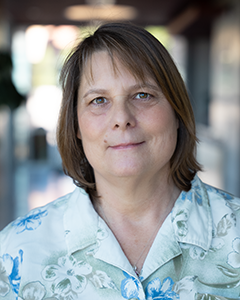 Apply if you are interested in: Science communication, hydrology, fire science, philosophy of science (science knowledge systems), project management, multimedia communication.
About the project: Science is often described as a set of tools and methods for understanding the natural world, based on observations and testable hypotheses. But it is far more than this – it is an intrinsically human activity shaped by assumptions, perspectives, and tacit knowledge, all built upon the work of many generations of scientists who have gone before. This project invites students to explore what science is by building transferrable skills in science communication, philosophy of science, and project management. Students will use journalistic-style inquiry to gather knowledge from researchers and create their own science communication product to share with real community audiences.
Commitment: 8 hours per week
Location: Reno, Nevada
Format: In-person
Dates: January 20 to May 8
Schedule and other requirements: Schedules to be determined one interns are selected.
Ancient landscapes: Lab techniques and field methods for paleohydrology of the Sierra Nevada
Mentors: Steve Bacon, Ph.D.
 Apply if you are interested in: Age-dating laboratory techniques, geologic mapping, and database management.
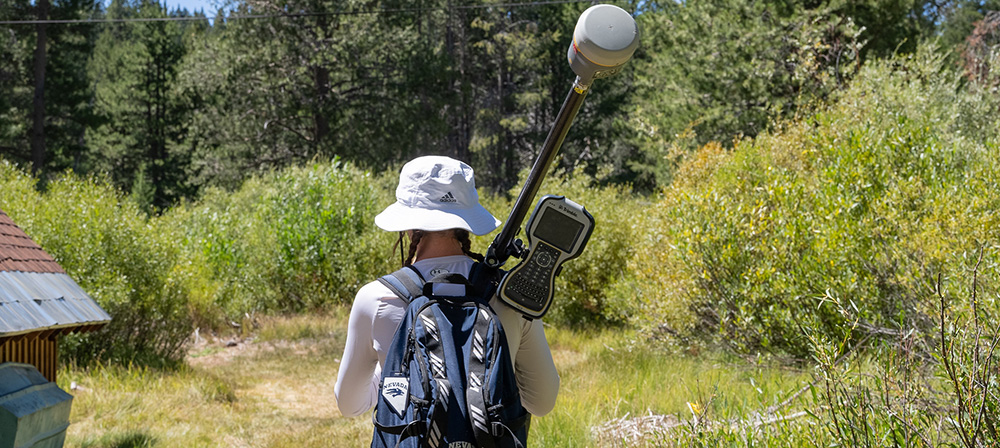
About the project: About the project: Scientists study landforms to understand important aspects of past climate and water conditions. This project involves processing sediment (soil) samples from key landform types of the Sierra Nevada in the DRI Luminescence Lab (DRILL) to understand the “paleohydrology” or past precipitation and snowpack conditions of the region. The intern will help prepare and measure sediment samples (sieving, acid digestion, mineral separation, rock drilling/slicing) for age determination, learn database management skills, along with learning basic geologic mapping and fieldwork techniques. Work in the DRILL is in limited lighting conditions that are similar to a photographic dark room—low levels of red light. Fieldwork will involve hiking with a backpack, carrying equipment, and sampling sediment.
Commitment: 8 hours per week
Location: Reno, Nevada
Format: In-person
Dates: January 20 to May 8
Schedule and other requirements: Schedules to be determined one interns are selected.
Geospatial data analysis to track movement of wildfires
Mentors: Ziming Ke, Ph.D.
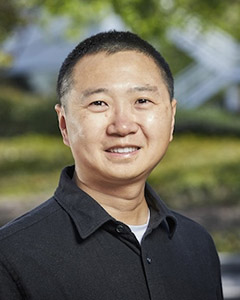 Apply if you are interested in: Remote sensing (GIS), coding with Python, data analysis, data visualization, and wildfire
About the project: Scientists and land managers rely on models to track and predict the movement of wildfire, which combine geospatial data with predictive models. Interns on this project will gain experience with remote sensing data from past fires to build satellite-to-map workflows that mirror what agencies and industry use. Students will learn and employ practical Python and GIS skills, including pandas, GitHub, and Jupyter notebooks, to build fire event models, maps, and figures that are specific to Nevada wildfires.
Commitment: 8 hours per week
Location: Reno, Nevada
Format: In-person
Dates: January 20 to May 8
Schedule and other requirements: Schedules to be determined one interns are selected.
Weather data analysis & communication for participatory science
Mentors: Meghan Collins
 Apply if you are interested in: Meteorology, weather hazards, weather forecasting, science communication, participatory (citizen) science, and data analysis
About the project: Accurately estimating winter weather precipitation at temperatures near freezing is surprisingly challenging, even for advanced weather monitoring technologies. Mountain Rain or Snow is a participatory (citizen) science project aimed at improving estimates of winter weather precipitation with the help of community observers across the country. This internship will contribute to the expansion of a pilot to add new weather hazards to community observers’ current protocol, including freezing rain, hail, sleet, and freezing fog. Interns on this project will help track winter weather hazards, train community observers on the new protocol, and analyze results.
Commitment: 3-4 hours per week
Location: Statewide
Format: Remote
Dates: January 20 to May 8
Schedule and other requirements: Schedules to be determined one interns are selected.
Data analysis for hydrology: Soils and a changing environment
Mentors: Kailong Li, PhD
 Apply if you are interested in: The study of soil water, wildfire, vegetation, big data, python programming, data visualization
About the project: Soil moisture plays a vital role in the Earth’s water and energy cycles, influencing vegetation growth, wildfire risk, and climate feedback. This project invites students to explore how environmental change affects soil moisture by preparing and analyzing a global in-situ soil moisture dataset. Students will collect, clean, and process data from multiple ground-based monitoring networks, gaining hands-on experience with real-world environmental observations. By examining how soil moisture responds to disturbances such as vegetation shifts and changes in soil structure, students will develop a deeper understanding of the dynamic interactions between soil, water, and the changing environment.
Commitment: 8 hours per week
Location: Las Vegas, NV
Format: In-person
Dates: January 20 to May 8
Schedule and other requirements: Schedules to be determined one interns are selected.
Program Support
Support for this program is generously provided by the NIWR Network and John Ben Snow Foundation and Memorial Trust.

Contact & Deadline
Meghan Collins, M.S.
Meghan.Collins@www-dev.dri.edu
Application Deadline
7 November 2025