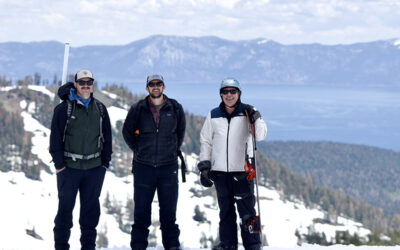
Dan McEvoy is a climatologist with the Western Regional Climate Center at DRI. His research interests span climate science, hydrology, and meteorology, and he is a widely recognized expert on the mountain snowpacks of the Western U.S.
In this interview, Dr. McEvoy answers frequently asked questions about how warmer temperatures are impacting water availability and wildfire risk in the West, and what he and other DRI scientists are doing to monitor these changes. This is the first in a new series of FAQ videos with DRI researchers.
If you’d like to see another faculty member highlighted in this series or have specific questions for our researchers, reach out to media@www-dev.dri.edu.
DRI: Why are mountain snowpacks so important to study?
So, the mountain snowpacks are a critical resource, especially in the Western United States. That’s where most of my research is focused, although they are critical resources around the globe, as well. And in places like the Western U.S., they provide the vast majority of the surface water supply that is used for public use, agriculture, recreation, all sorts of different things. And so, it’s really the lifeblood of society in places like the Western United States.
DRI: How are snowpacks across the West changing?
Snowpacks across the western U.S. — there is a noticeable change over the last 50 to 75 years. That’s when we have the most observations to study this. There has been a noted decline in the snowpack across pretty much the entire Western United States. There’s snow coarse data, these are manual observations taken by observers that go out into the field, that go all the way back to 1950. Some of those go as far back as the early 1900s. And all this data supports declining peak snowpack across the Western U.S. over the last 50 to 100 years.
DRI: How does this impact water availability?
As I mentioned, the snowpack is the primary source of water in the Western U.S. And so it gets a little more complicated on exactly how declining snowpack alone impacts our water supply. And the reason for that complexity is that the annual precipitation patterns are not necessarily changing that much.
So, in places we might have very little trend or change in the long-term precipitation, but we are seeing the snowpack decline. So that means we’re actually getting the same amount of water potentially coming into the system. That’s where it gets a little bit complex. But in general, less snowpack has been related to less available surface water supply, particularly in a warming world like we’re in right now with climate change over the last several decades.
That means increased temperatures are the primary driver leading to things like more evaporation and water lost back to the atmosphere, and more water being soaked up in the soils as opposed to going directly into the streams and rivers and reservoirs. Generally speaking, there is concern with declining snowpack that the surface water supply will also be declining over time.
DRI: How does this impact wildfire risk?
There is a connection between snowpack and wildfire risk and wildfire danger in the Western United States. If you’ve ever been out in the mountains when it’s snowy versus when there is no snow, obviously it’s a lot drier. And it’s really difficult for a fire, even if one does start when there is snow on the ground, for that fire to spread across the snow-covered landscape. The basic part of it is if there is snow on the ground, it’s very hard to have large wildfires spread. Where that plays into changing climate and the declining snowpacks is that the snowpacks are melting out earlier than they used to. Again, due to warming temperatures and less snow in general. So, when you have the snow melt out earlier than average, the soil, vegetation, trees and plants are all exposed to the atmosphere and the sun and heat longer than they would be if they were covered in snow, which means they have more time to dry out and they can get drier. Because we have our climatological dry season in the Western U.S. that can last several months.
We’ve also seen a trend in snowpacks melting out earlier than they used to, leaving the ground, vegetation, and soils exposed to the atmosphere longer, which means that the fuels for wildfires can dry out sooner, and they can also become drier than they would if they had been covered in snow for a longer period of time.
When we have very large snowpack years, like 2023 in the Sierra Nevada, there is less risk of fire, especially earlier in the summer season. That can change later in the season. But then we look at years like 2021, 2022 and 2020, which are all drought years, and very active wildfire years. Those are years with less snowpack that melted out earlier. So there definitely is that connection between wildfire danger and the amount of snow that’s on the ground.
DRI: What are you and other researchers doing to monitor the changing snowpack?
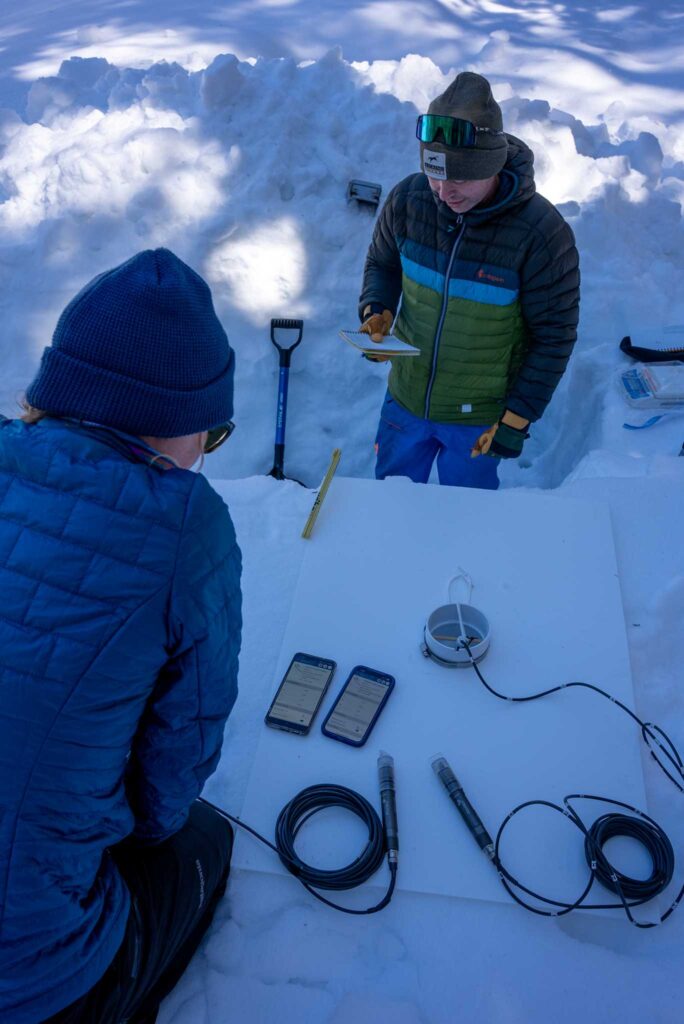
There is a lot of good research being done at DRI related to understanding the changing snowpack, understanding the snow hydrology, the atmospheric conditions that are changing our snowpack. And this includes research on understanding the physical processes and developing instrumentation and web-based tools to help monitor this.
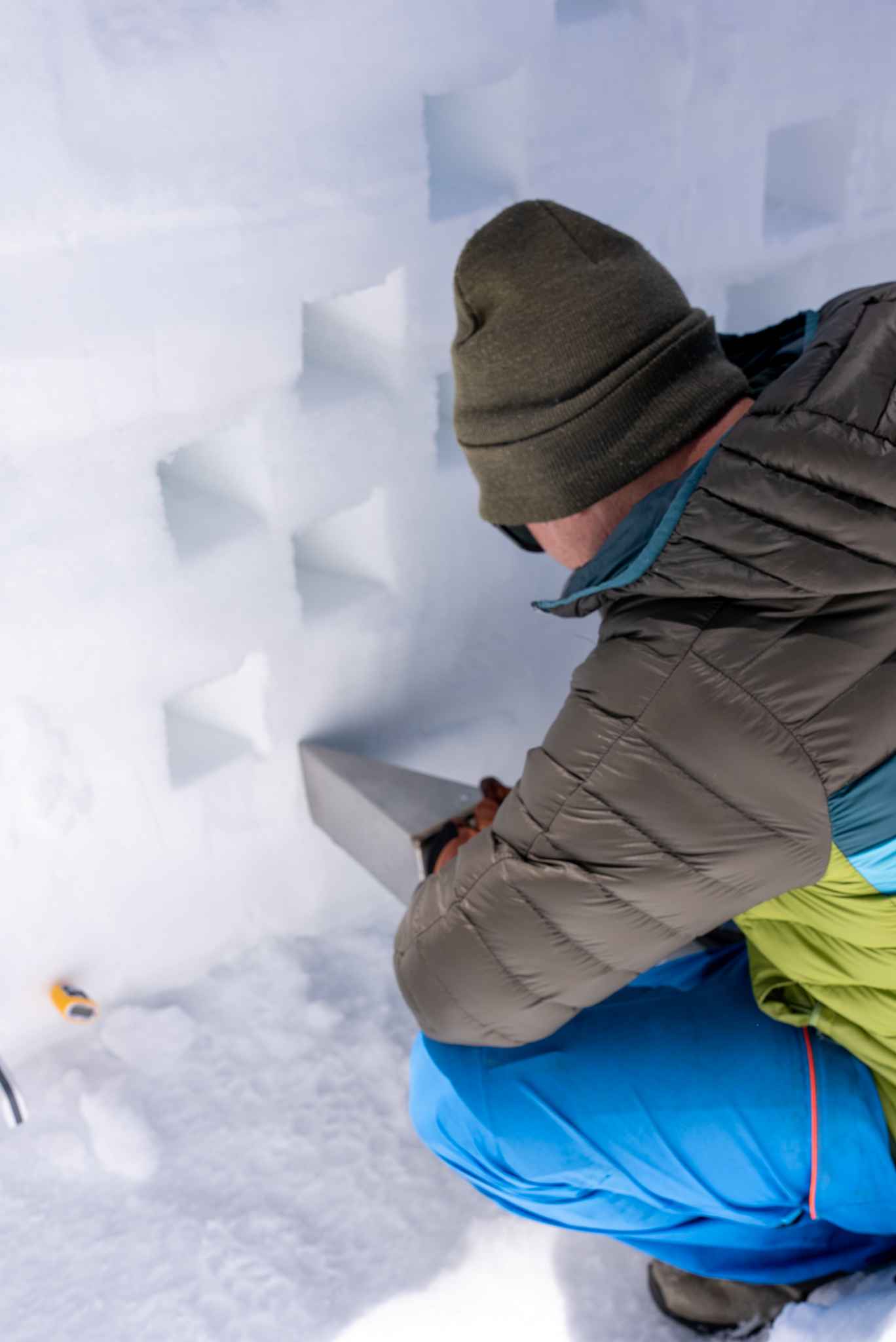
There are a couple of things that I’ve been working on with others at DRI. For me in particular, I’ve spent the last 8 to 10 years or so working on understanding snow droughts. And this is directly related to the changing and declining snow packs that we’ve been seeing, trying to understand what is really causing us to have these years with less than average snowpack — is it just because we have years with less precipitation, or is it that we have years with average precipitation, but it’s too warm to snow in the mountains and so we’re getting more rain? So understanding those types of processes, what types of data sets we can use to monitor these things. And I think more importantly, what types of information we can provide to our partners like water resource managers and wildfire managers and other natural resource managers in general. What is the best information? What type of information do they need to help them make better decisions related to snow? And so that’s some of the snow drought work. And then I’ve also been working on a project led by Dr. Anne Heggli developing a new instrumentation method to measure the temperature profile of the snowpack, which is really critical to help us understand the timing of when the snowpack is ready to melt, especially for springtime snowmelt and also the risk for flooding related to rain on snow. And so there is a lot of good work going on at DRI to support a better understanding of snow science in general and applications to things like planning and decision making.